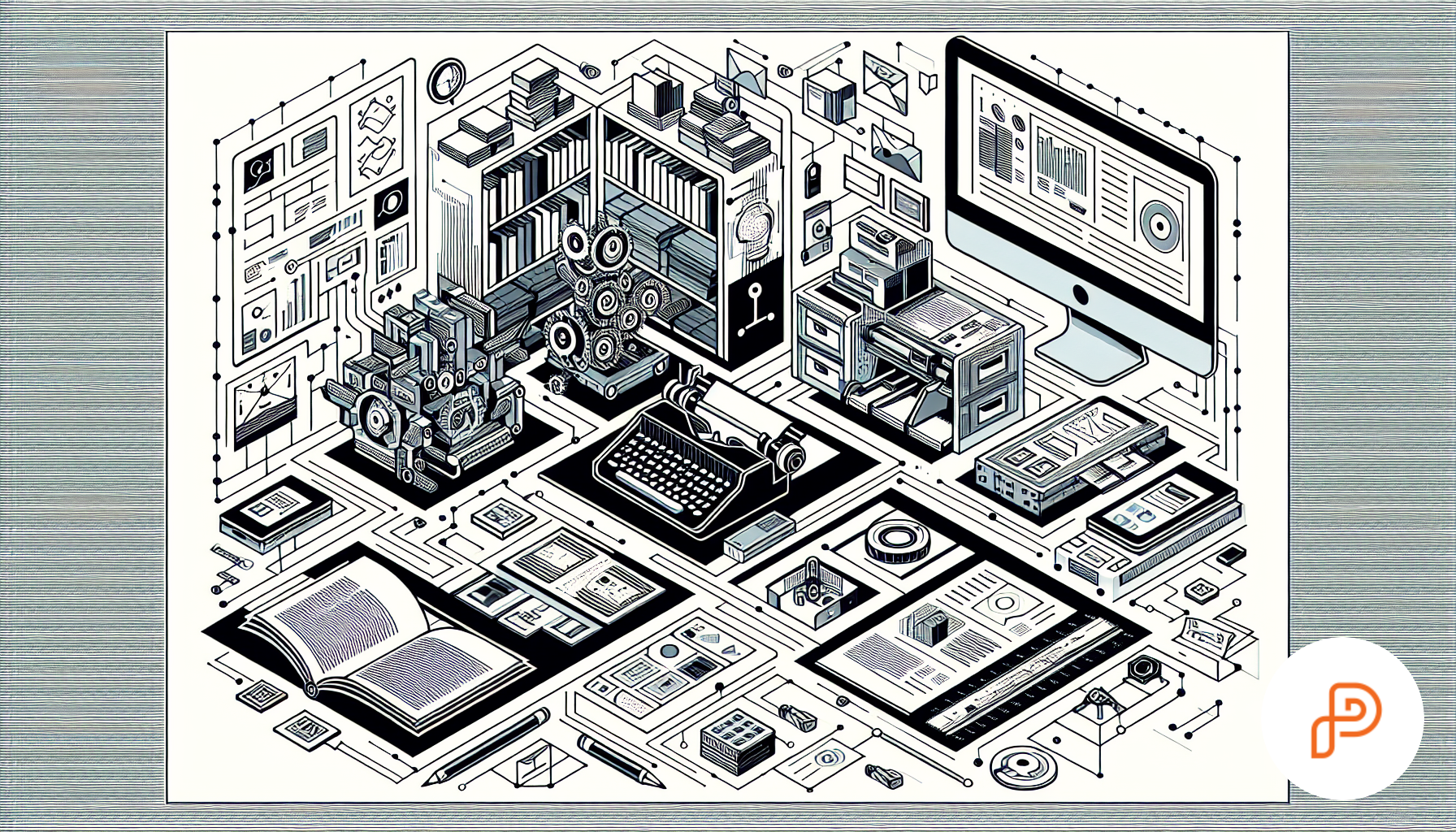
The Publishing Industry’s AI Gamble: Survival or Surrender?
The publishing industry’s current predicament isn’t surprising; it’s been years in the making. A business model that has relied on outdated workflows, cyclical cost-cutting, and a stubborn adherence to legacy systems was always destined for turbulence. But now, in the first quarter of 2025, mass layoffs and budget slashing have become the norm, not the exception. And yet, amidst the carnage, AI is being framed as the saviour—not just for operational efficiency, but for the very survival of publishing itself. The question is whether this is a genuine transformation or yet another desperate attempt to patch a sinking ship.
From Band-Aid to Lifeline?
The argument being made by industry executives—that AI can automate accessibility compliance, streamline content alignment, and bring outsourced capabilities in-house—sounds compelling. But let’s not mistake these incremental improvements for a long-term strategy. AI adoption isn’t just about efficiency; it’s about fundamentally rethinking what publishing means in an era where content creation is increasingly commoditised, distribution channels are monopolised, and reader attention is fractured across countless platforms.
For years, the publishing sector has clung to outsourcing as a cost-saving mechanism, sending accessibility compliance and editorial workflows to contractors or vendors. But this wasn’t just about saving money—it was a symptom of deeper structural issues. By outsourcing critical processes, publishers distanced themselves from the expertise and infrastructure they needed to innovate. Now, they’re attempting to bring these operations back in-house using AI, but that shift doesn’t solve the core problem: a lack of vision for how publishing can thrive in a digital-first, algorithm-driven world.
The AI-Native Threat
The urgency behind AI adoption is partly driven by the looming threat of AI-native competitors. These companies, built from the ground up with automation baked into their DNA, are poised to disrupt traditional publishing in ways that legacy players can’t match. They don’t need to retrofit systems or retrain staff—they start with the assumption that content creation, distribution, and monetisation are inherently algorithmic processes.
For traditional publishers, the five-to-ten-year window cited in industry commentary might be overly optimistic. AI-native competitors aren’t waiting for incumbents to catch up; they’re already deploying tools that automate everything from content generation to personalised recommendations, all while leveraging user data to refine their offerings. The publishing industry’s Achilles’ heel has always been its reluctance to embrace data-driven strategies, and AI-native firms are exploiting that gap with precision.
The Privacy and Security Blind Spot
What’s missing from the current AI narrative in publishing is an honest reckoning with its privacy and security implications. Publishers are rushing to adopt AI tools that promise efficiency, but how many are interrogating the data practices underpinning these systems? Accessibility compliance, for example, often involves handling sensitive information about users’ needs and behaviours. Automating this process with AI might save time, but it also raises questions about where this data is stored, who has access to it, and how it might be exploited.
The outsourcing model that publishers are now abandoning wasn’t just inefficient—it also created a buffer between publishers and the risks associated with data breaches or misuse. By bringing these processes in-house, publishers are taking on new liabilities that many aren’t adequately prepared for. AI vendors, eager to lock in long-term contracts, often gloss over these risks in their pitches. But as regulatory scrutiny around data privacy intensifies globally, publishers could find themselves in hot water if they fail to implement robust security measures alongside their AI rollouts.
What Should Have Been Automated Years Ago?
The industry’s newfound enthusiasm for AI begs a larger question: why are publishers only now automating processes that have been ripe for disruption for years? Accessibility compliance, content alignment, and inventory management aren’t new challenges—they’ve been pain points for decades. The delay in addressing them speaks to a broader pattern of inertia within publishing. Rather than proactively exploring technological innovation, many publishers have opted to reactively implement solutions only when the pain becomes unbearable.
But AI’s promise goes beyond these operational fixes. If publishers had embraced AI earlier, they could have focused on enhancing reader engagement, personalising content delivery, and building more robust analytics capabilities. Instead, they’re stuck automating the same processes that should have been modernised years ago. This reactive mindset is precisely what gives AI-native competitors the upper hand.
A Strategy, Not a Survival Tactic
AI isn’t just a tool—it’s a paradigm shift. Treating it as a lifeline for survival misses the bigger picture. To truly leverage AI, publishers need to rethink their value proposition in the digital age. That means going beyond cost-cutting and workflow optimisation to address the systemic issues at the heart of the industry’s decline: reliance on monopolistic distribution platforms, failure to cultivate direct relationships with readers, and an unwillingness to experiment with new revenue models.
If the publishing sector continues to treat AI as a tactical fix for immediate challenges rather than a strategic enabler for long-term innovation, it risks becoming obsolete. The companies that survive won’t be the ones that automate accessibility compliance; they’ll be the ones that reimagine publishing for a world where content is abundant and attention is scarce.
The Clock Is Ticking
Ultimately, the industry’s current trajectory feels like a race against time. AI-native firms aren’t just competitors—they’re a glimpse into the future of publishing. If legacy players hope to remain relevant, they need to move beyond superficial automation and embrace the deeper transformation that AI enables. That means asking hard questions: how do we safeguard user data? How do we differentiate ourselves in a crowded content ecosystem? And most importantly, what does publishing mean in an AI-driven world?
The publishing industry is at a crossroads. AI may indeed be a lifeline—but only if publishers use it wisely.
Leave a Reply